neurodivergence & the holidays
This post comes in whatever flavour your brain wants today:
a visual zine, a plain-text/written version, and an easy-listening audio.
Want a copy of this zine?
Download the PDF and feel free to print or share it with others.
Please credit Gillian Hestad (Divergent North) as the writer.
Suggested credit line: “© Gillian Hestad, Divergent North — used with permission.
neurodivergence & the holidays
(Blog Edition)
SYNAPSE SYNOPSIS V. 7 - Winter 2025
written by Gillian Hestad / DivergentNorth.ca
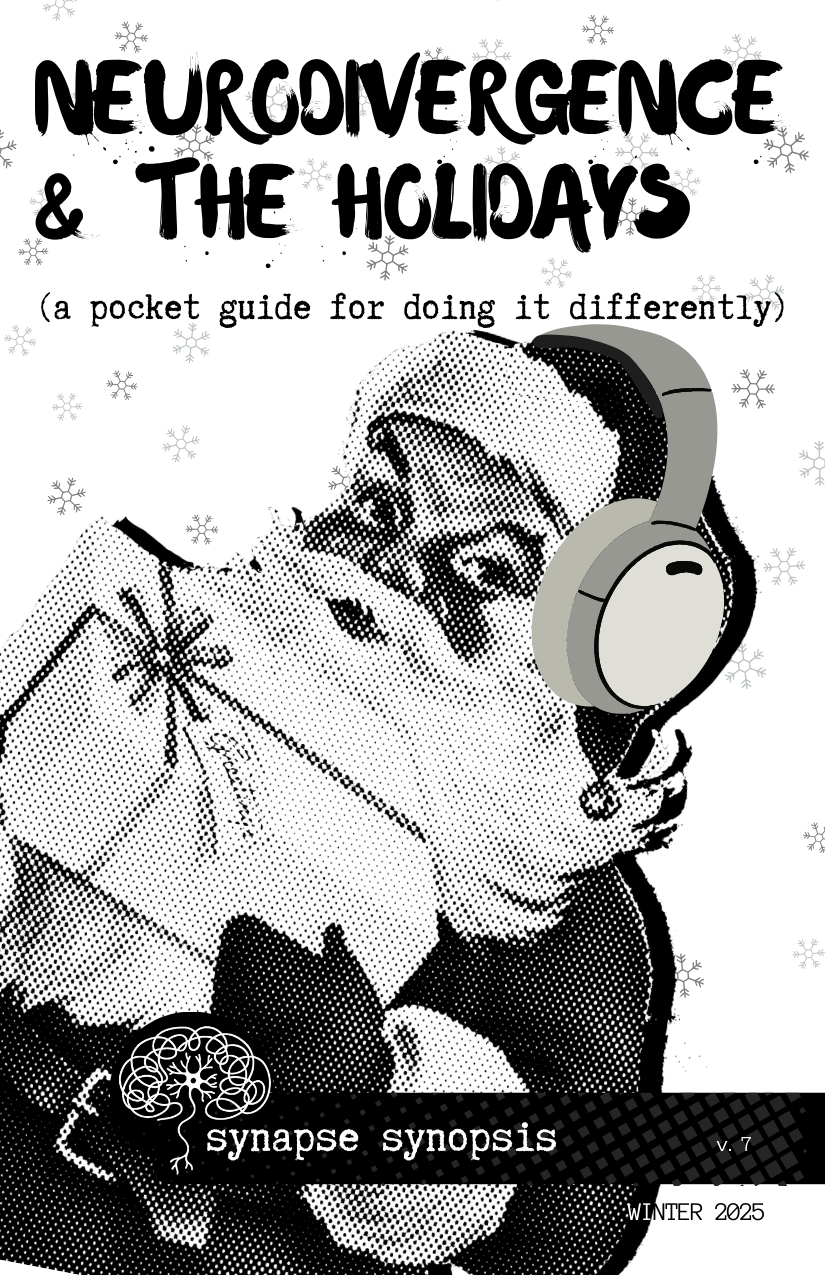
NEURODIVERGENCE & THE HOLIDAYS
(a pocket guide for doing it differently)
HOLIDAYS CAN BE HARD
Holidays disrupt routines, increase sensory input, and add social demand... all at once.
Neurodivergent nervous systems are more affected by unpredictability and overload.
This isn’t about how capable you are. It’s about capacity.
Your brain is doing more work than usual.
SOCIAL ENERGY IS REAL ENERGY
Holidays come with hidden rules:
when to arrive, how long to stay, how to act grateful.
For many neurodivergent folx, this means masking, decoding, and constant self-monitoring.
That’s exhausting — even with people you love.
SENSORY OVERLOAD ≠ DRAMA
Lights, noise, smells, crowds, textures... Holiday environments are INTENSE.
Neurodivergent sensory systems process input more strongly or with less filtering.
Shutdown, irritability, or the urge to escape aren’t flaws.
These are signals.
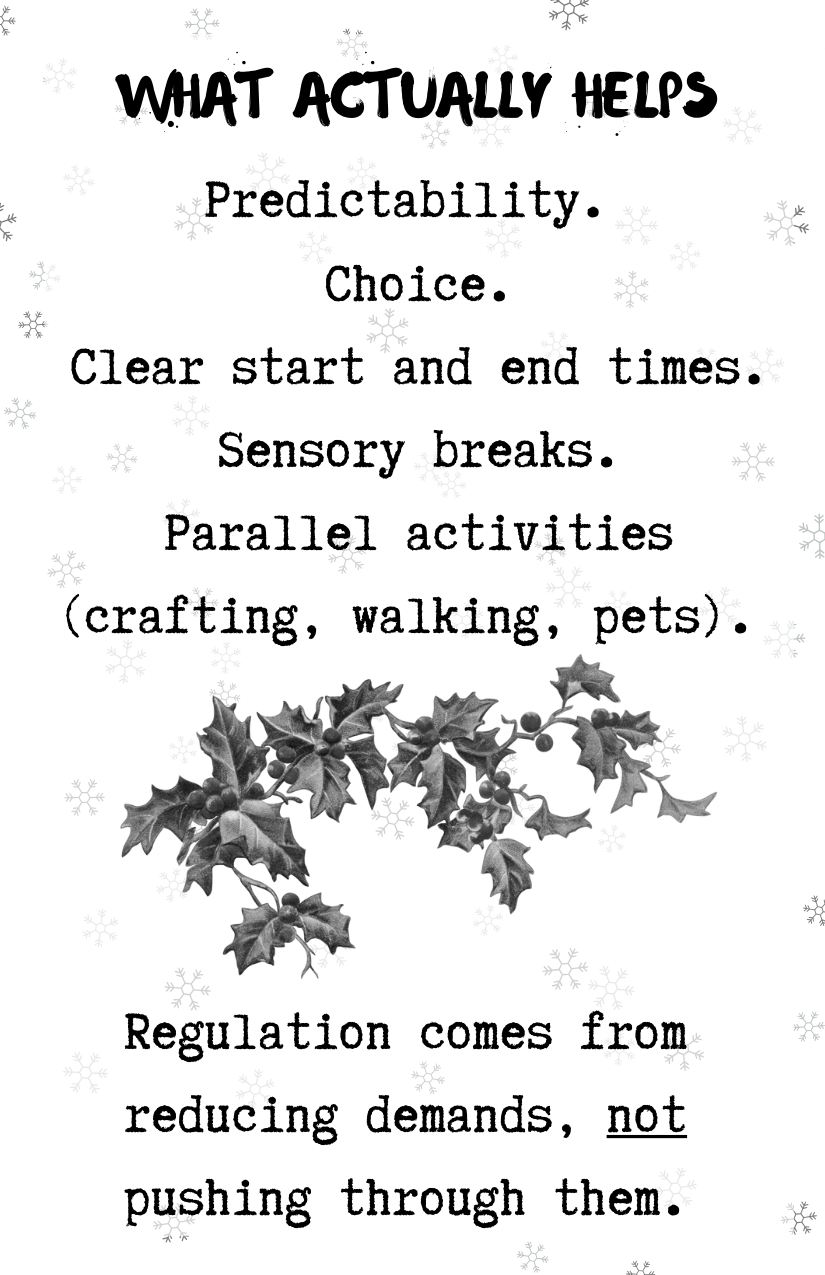
WHAT ACTUALLY HELPS
Predictability.
Choice.
Clear start and end times.
Sensory breaks.
Parallel activities (crafting, walking, pets).
Regulation comes from reducing demands, not pushing through them.
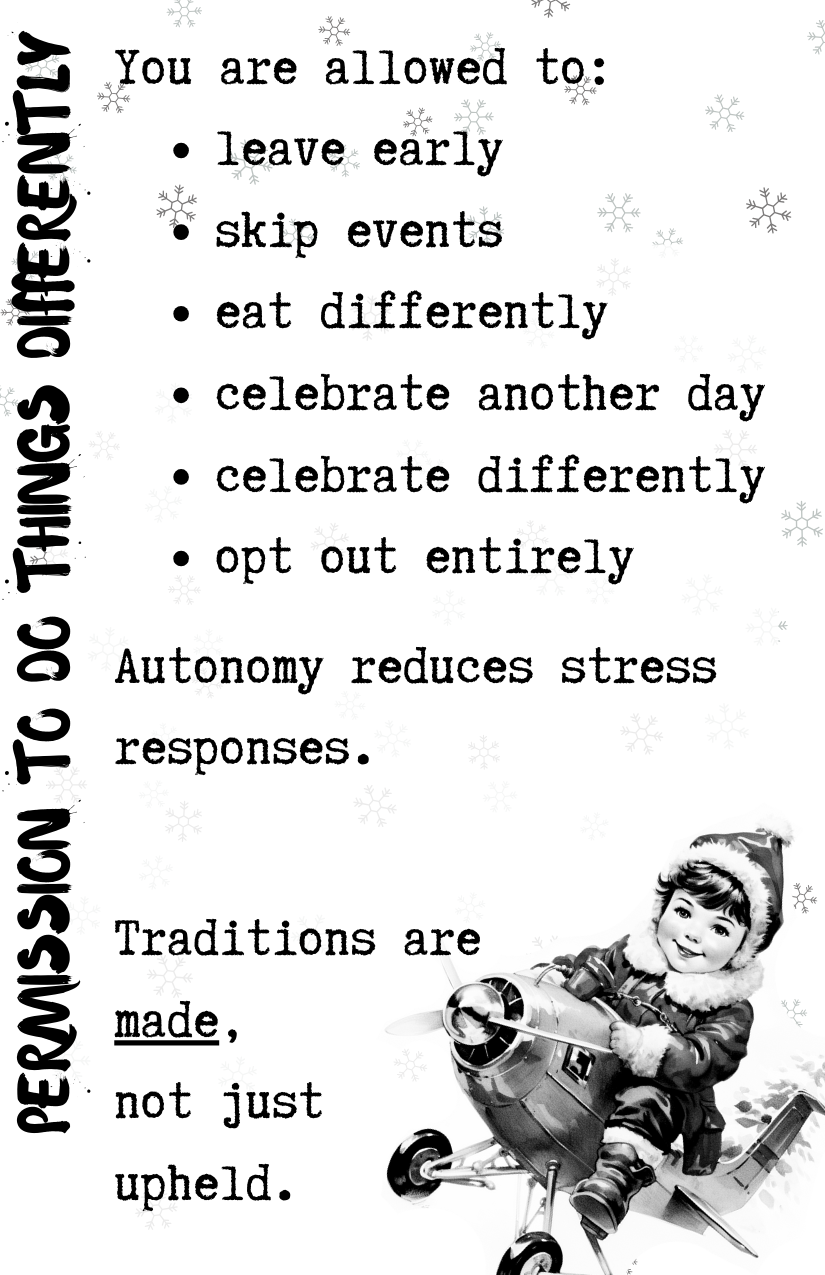
PERMISSION TO DO THINGS DIFFERENTLY
You are allowed to:
leave early
skip events
eat differently
celebrate another day
celebrate differently
opt out entirely
Autonomy reduces stress responses.
Traditions are made, not just upheld.
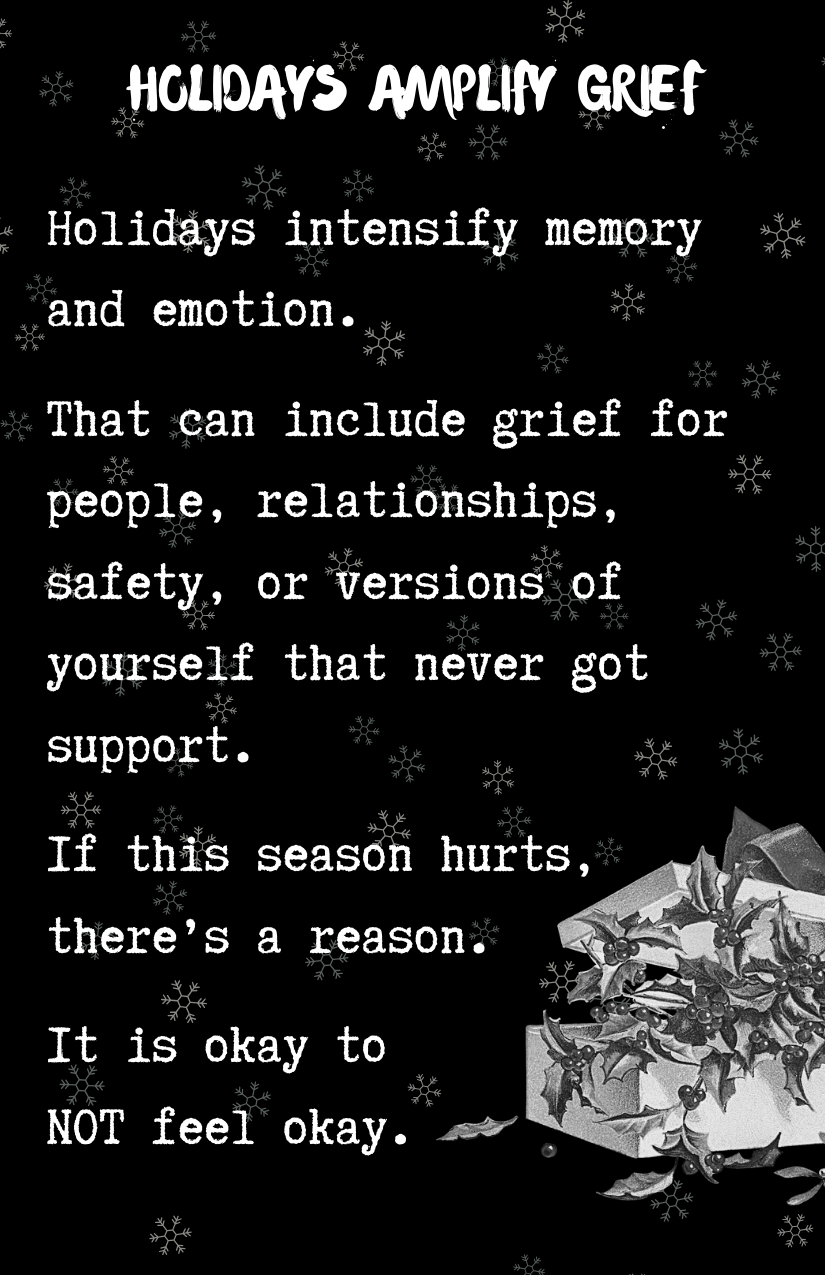
HOLIDAYS AMPLIFY GRIEF
Holidays intensify memory and emotion.
That can include grief for people, relationships, safety, or versions of yourself that never got support.
If this season hurts, there’s a reason.
It is okay to NOT feel okay.
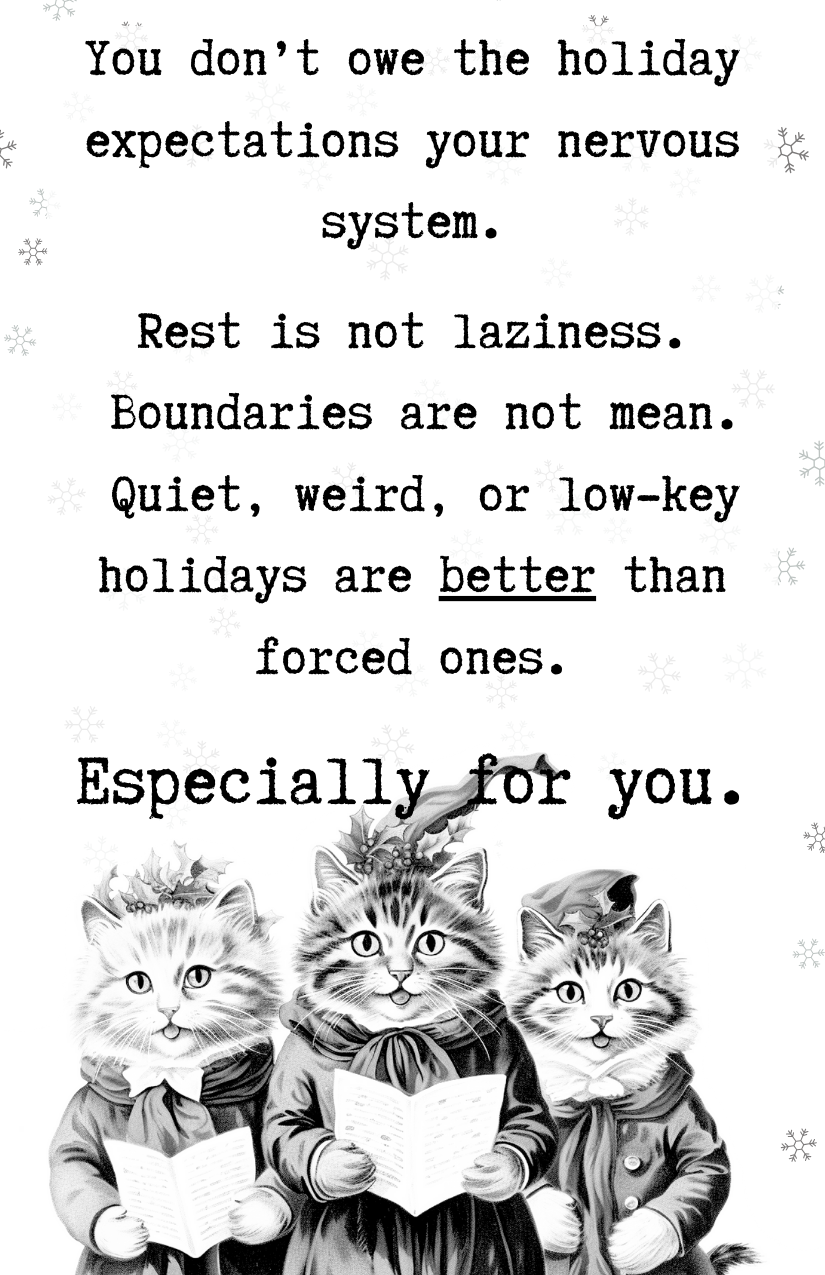
You don’t owe the holiday expectations your nervous system.
Rest is not laziness.
Boundaries are not mean.
Quiet, weird, or low-key holidays are better than forced ones.
Especially for you.
TL;DR
Holidays increase sensory input, disrupt routines, and add social demand — which can overwhelm neurodivergent nervous systems.
Social energy and sensory processing take real effort; exhaustion is not a personal failure.
What helps most is reduced demand: predictability, choice, sensory breaks, and permission to opt out.
Quiet, weird, or low-key holidays aren’t a downgrade — they’re often better than forced ones.